ETHICAL AND UNETHICAL ISSUES IN MANAGEMENT OF HR, FINANCE AND MARKETING
ETHICAL AND UNETHICAL ISSUE IN HR, FINANCE AND MARKETING
Ethical Issues Faced by Human Resource
1. Employment Issues:
HR professionals are likely to face maximum ethical dilemmas in the areas of hiring of employees.a. Pressure to hire a friend or relative of a highly placed executive.
b. Faked credentials submitted by a job applicant.
c. Discovery that an employee who has been with the organisation for some time, is skilled and has established a successful record, had lied about his educational credentials.
2. Cash and Incentive Plans:
Cash and incentive plans include issues like basic salaries, annual increments or incentives, executive perquisites and long term incentive plans:Basic Salaries:
HR managers have to justify a higher level of basic salaries or higher level of percentage increase than the competitors to retain some employees. In some situations, where the increase is larger than normal they have to elevate some positions to higher grades. Annual increment/incentive Plans. This situation is particularly true in case of top management executives. The fear of losing some outstanding executives, the HR managers is forced to give higher incentives to them than what the individuals actually deserve.
Executive Perquisites:
In the name of executive perquisites, sometimes excesses are often committed, the ethical burden of which falls on the HR managers. Sometimes the costs of these perquisites are out of proportion to the value added. For example, the CEO of a loss making company buys a Mercedes for his personal use or wants a swimming pool built at his residence.
Long term incentive Plans. Long term incentive plans are to be drawn by the HR managers in consultation with the CEO and an external consultant. Ethical issues arise when the HR manager is put to pressure to favour top executive interests over the interests of the other employees and the investors.
3. Employees Discriminations:
A framework of laws and regulations has been evolved to avoid the practices of treatment of employees on the basis of their caste, sex, religion, disability, age etc. No organisation can openly practice any discriminatory policies, with regard to selection, training, development, appraisal etc. A demanding ethical challenge arises when there is pressure on the HR manager to protect the firm or an individual at the expense of someone belonging to the group which is being discriminated against.
4. Performance Appraisal:
Ethics should be the basis of performance evaluation. Highly ethical performance appraisal demands that there should be an honest assessment of the performance and steps should be taken to improve the effectiveness of employees. However, HR managers, sometimes, face the dilemma of assigning higher rates to employees who are not deserving them; based on some unrelated factors eg. closeness to the top management. Some employees are, however, given low rates, despite their excellent performance on the basis of factor like caste, religion or not being loyal to the appraiser.
5. Privacy:
The private life of an employee which is not affecting his professional life should be free from intrusive and unwarranted actions.
HR managers face three dilemmas in this aspect:
(i) The first dilemma relates to information technology. A firm’s need for information particularly about employees while on job may be at odds with the employee’s privacy. Close circuit cameras, tapping the phones, reading the computer files of employees etc. breach the privacy of employees.
(ii) The second ethical dilemma relates to the AIDS testing. AIDS has become a public health problem. HR managers are faced with two issues: Whether all the new employees should be subject to AIDS test and what treatment should be melted out to an employee who is affected with the disease. It is however generally understood that since AIDS cannot be contracted by casual and normal workplace contract, employees with this illness should not be discriminated against and they should be allowed to perform jobs for which they are qualified.
(iii) The third ethical dilemma relates to Whistle Blowing. Whistle blowing refers to a public disclosure by former or current employees of any illegal, immoral or illegitimate practices involving their employers. Generally, employees are not expected to speak against their employers, because their first loyalty in towards the organisation for which they work. However, if the situation is such that some act of the organisation can cause considerable harm to the society, it may become obligatory to blow the Whistle. The HR manager is in the dilemma how to solve this issue between the opponents and defenders of whistle blowing.
6. Safety and Health:
Industrial work is often hazardous to the safety and health of the employees. Legalisation have been created making it mandatory on the organisations and managers to compensate the victims of occupational hazards. Ethical dilemmas of HR managers arise when the justice is denied to the victims by the organisation.
7. Restructuring and layoffs:
Restructuring of the organisations often result in layoffs and retrenchments. This is not unethical, if it is conducted in an atmosphere of fairness and equity and with the interests of the affected employees in mind. If the restructuring company requires closing of the plant, the process by which the plant is chosen, how the news is to be communicated and the time frame for completing the layoffs is ethically important.
Ethical Issues in Marketing
Ethical issues in marketing arise from the conflicts and lack of agreement on particular issues. Parties involved in marketing transactions have a set of expectations about how the business relationships will take shape and how various transactions need to be conducted. Each marketing concept has its own ethical issues, which we will discuss in this chapter.
Emerging Ethical Problems in Market Research
Market research has experienced a resurgence with the widespread use of the Internet and the popularity of social networking. It is easier than ever before for companies to connect directly with customers and collect individual information that goes into a computer database to be matched with other pieces of data collected during unrelated transactions.
The way a company conducts its market research these days can have serious ethical repercussions, affecting the lives of consumers in ways that have yet to be fully understood. Further, companies can be faced with a public backlash if their market research practices are perceived as unethical.
Grouping the Market Audience
Unethical practices in marketing can result in grouping the audience into various segments. Selective marketing may be used to discourage the demand arising from these so-called undesirable market segments or to disenfranchise them totally.
Examples of unethical market exclusion may include the industry attitudes towards the gay, ethnic minority, and plus-size groups.
Ethics in Advertising and Promotion
In the early days of existence of corporations, especially during 1940s and 1950s, tobacco was advertised as a substance that promotes health. Of late, an advertiser who does not meet the ethical standards is considered an offender against morality by the law.
- Sexuality is a major point of discussion when ethical issues in advertising content are considered. Violence is also an important ethical issue in advertising, especially where children should not be affected by the content.
- Some select types of advertising may strongly offend some groups of people even when they are of strong interest to others. Female hygiene products as well as haemorrhoid and constipation medication are good examples. The advertisements of condoms are important in the interest of AIDS-prevention, but are sometimes seen by some as a method of promoting promiscuity that is undesirable and strongly condemned in various societies.
- A negative advertising policy lets the advertiser highlight various disadvantages of the competitors’ products rather than showing the inherent advantages of their own products or services. Such policies are rampant in political advertising.
Delivery Channels
Direct marketing is one of the most controversial methods of advertising channels, especially when the approaches included are unsolicited.
Some common examples include TV and Telephonic commercials and the direct mail. Electronic spam and telemarketing also push the limits of ethical standards and legality in a strong manner.
Example − Shills and astroturfers are the best examples of ways for delivering a marketing message under the guise of independent product reviews and endorsements, or creating supposedly independent watchdog or review organizations. Fake reviews can be published on Amazon. Shills are primarily for message-delivery, but they can also be used to drive up prices in auctions, such as EBay auctions.
Deceptive Marketing Policies and Ethics
Deceptive marketing policies are not contained in a specific limit or to one target market, and it can sometimes go unseen by the public. There are numerous methods of deceptive marketing. It can be presented to consumers in various forms; one of the methods is one that is accomplished via the use of humor. Humor offers an escape or relief from various types of human constraints, and some advertisers may take the advantage of this by applying deceptive advertising methods for a product that can potentially harm or alleviate the constraints using humor.
Anti-Competitive Practices
There are various methods that are anti-competitive. For example, bait and switch is a type of fraud where customers are "baited" through the advertisements for some products or services that have a low price; however, the customers find in reality that the advertised good is unavailable and they are "switched" towards a product that is costlier and was not intended in the advertisements.
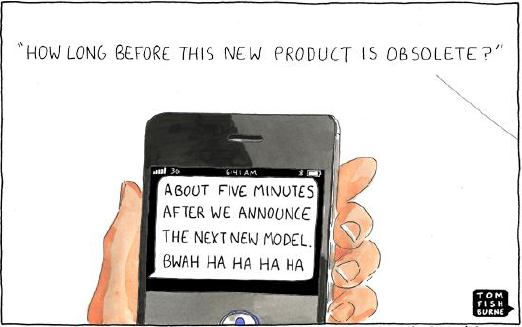
Another type of anti-competitive policy is planned obsolescence. It is a method of designing a particular product having a limited useful life. It will become non-functional or out of fashion after a certain period and thereby lets the consumer to purchase another product again.
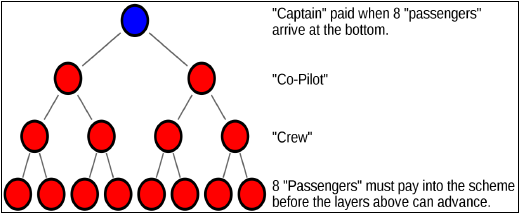
A pyramid scheme is also an anti-competitive process. It is a non-sustainable business model that promises the participants payment or services, mainly for enrolling other people into the scheme; it does not supply any real investment or sell products or services to the public.
This business practice demands the initial investor or the "captain" to enroll other people for a fee to them who again will further enroll more people in order to be paid by the company.
Pricing Ethics
There are various forms of unethical business practices related to pricing the products and services.
Bid rigging is a type of fraud in which a commercial contract is promised to one party, however, for the sake of appearance several other parties also present a bid.
Predatory pricing is the practice of sale of a product or service at a negligible price, intending to throw competitors out of the market, or to create barriers to entry.
Ethical Issues of Financial Reporting

Cooking the Books
Financial reporters may be asked to “cook the books” when poor documentation has been kept of expenditures and asset value. This practice involves making up figures that may or may not be good estimates of actual numbers. While pressure to do this may come from the very top of a company, the practice is not only unethical, but also outright fraudulent. Cooking the books also includes manipulation of accounting records in preparing financial statements, as well as the intentional omission of important asset of liability information from financial reports. A company might overstate how much it made in profits to attract investors, for instance, or understate its liabilities to avoid creating investor panic.
Cute Accounting
This term describes the practice of stretching or bending standards set by the accountancy profession to the limit. An example of this might include structuring lease agreements so that any leased assets, along with any liabilities that come with those leases, can be kept off their books. Some financial experts argue that this is unethical, because companies that do this are essentially misrepresenting their assets and liabilities. In “Ethical Issues in Financial Reporting: Is Intentional Structuring of Lease Contracts to Avoid Capitalization Unethical?” author Thomas J. Frecka states that this was one factor that led to the Enron scandal. While less egregious than cooking the books, this practice demonstrates a lack of respect for the principles the accounting profession abides by.
Conflicts of Interest
A conflict of interest can result when an employee receives an inappropriate personal benefit as the result of any actions performed in his official role as a financial reporter. As an example, consider a financial reporter who overstates a company’s income as a way to ensure a larger bonus for himself. This is a direct conflict of interest because the financial reporter is reaping a gain from his unethical activities. It also flies in the face of the accounting profession’s code of ethics, which requires absolute objectivity.
Breach of Confidentiality
Insider trading is an easy example of breach of confidentiality in financial reporting. A breach of confidentiality refers to any disclosure of confidential or proprietary information that an employee acquires as the result of her employment as a financial reporter. When that information is used for personal gain or for the gain of some third party, the financial reporter has broken her implicit oath of confidentiality to her employer.
Comments
Post a Comment